

Artificial intelligence and cloud computing have dominated technology discussions for years. But the next stage of technological development is becoming broader than AI models and cloud platforms.
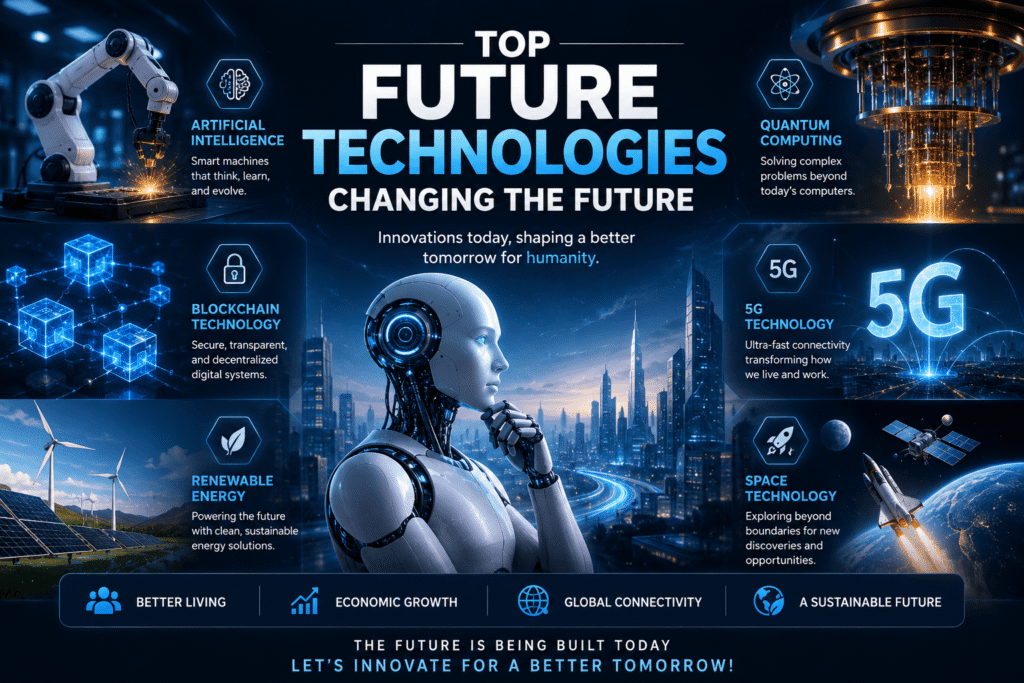
In 2026, some of the most interesting developments are happening at the intersection of AI, robotics, quantum computing, biotechnology, energy, materials science and cybersecurity.
The World Economic Forum’s 2026 emerging technology report highlights technologies ranging from everything-to-grid energy and direct lithium extraction to personalized cancer vaccines, quantum simulation and lattice-based cryptography. Gartner’s 2026 technology trends also point toward physical AI, multiagent systems, AI infrastructure and security.
That does not mean these technologies will all become mainstream this year. Some are already being deployed, while others still need better economics, regulation, infrastructure or scientific validation.
Here are 10 emerging technologies worth watching closely in 2026.
-
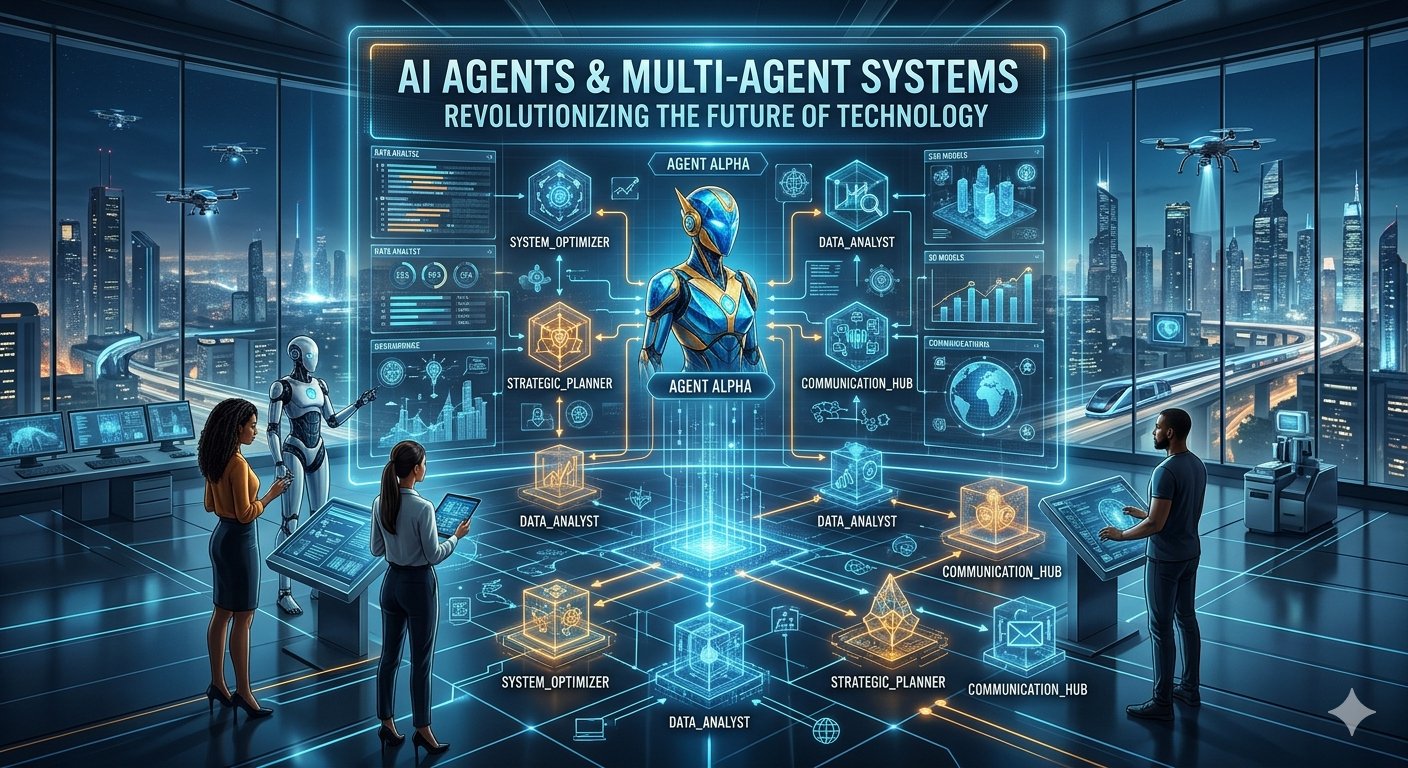
AI Agents and Multi-Agent Systems
Generative AI can create text, images, code and other content. The next step is giving AI systems the ability to perform longer sequences of actions with less human intervention.
This is where AI agents come in.
An AI agent can receive a goal, break it into smaller tasks, use software tools, gather information and take actions. Instead of simply answering “How can I analyze this sales data?”, an agent could potentially collect the data, analyze it, identify unusual changes and prepare a report.
The more advanced version is a multi-agent system, where several specialized agents work together.
For example, one agent could research competitors, another could analyze financial information and another could prepare a summary. The system can coordinate these tasks rather than relying on one model to handle everything.
Gartner lists multi-agent systems among its major strategic technology trends for 2026, while McKinsey identifies agentic AI as one of the technology trends shaping enterprise adoption.
Why it matters
AI agents could change how people interact with software.
Instead of opening five different applications and manually moving information between them, a user could describe the desired outcome and let an agent coordinate parts of the workflow.
The important question for 2026 is therefore not simply whether AI can generate content. It is whether AI can reliably complete useful tasks.
Where it could be used
- Customer support
- Software development
- Research
- Marketing
- Business operations
- Data analysis
- Cybersecurity
- Personal productivity
The biggest limitation is reliability. An agent that makes a mistake while writing a social media post is one thing. An agent that makes an incorrect financial, medical or security decision is another.
That makes permissions, monitoring and human oversight just as important as the underlying AI model.
-
Physical AI and Humanoid Robotics
Most AI systems still exist inside computers.
Physical AI brings intelligent systems into the physical world.
Robots equipped with cameras, sensors, machine-learning models and increasingly capable hardware can perceive their surroundings and respond to changing conditions.
This is particularly important for manufacturing, logistics, warehouses, agriculture and other environments where machines have to interact with physical objects.
Humanoid robots are one visible part of this trend. Their human-like shape is useful in environments designed around people, although it is not always the most efficient design for a particular task.
The broader development is more important than humanoid robots alone. Robots are becoming better at perception, navigation, manipulation and learning.
Gartner includes physical AI among its 2026 strategic technology trends, while McKinsey’s 2026 technology outlook identifies robotics as one of the major technology areas to watch.
Why it matters
Software automation works well when the task exists entirely on a screen.
Physical work is harder because the real world is unpredictable.
A robot has to deal with objects being in different positions, changing lighting, unexpected obstacles and imperfect information.
Progress in AI, sensors, simulation and computing is gradually reducing these limitations.
Where it could be used
- Factories
- Warehouses
- Delivery operations
- Agriculture
- Healthcare
- Construction
- Home assistance
- Industrial inspection
The technology still faces high hardware costs, safety requirements and reliability problems. Mass adoption will depend on whether robots can perform useful tasks consistently enough to justify their cost.
-
World Models

One of the more interesting developments in AI is the move from simply recognizing patterns to modelling how environments behave.
This is the idea behind world models.
A world model attempts to learn relationships between objects, actions and outcomes. It can use information such as video, images, sensor data and other forms of input to build an internal representation of an environment.
Imagine a robot learning what happens when it pushes an object.
Rather than memorizing one specific example, a capable world model could learn a broader relationship between force, movement, objects and their surroundings.
That could help an AI system predict what might happen before it takes an action.
The World Economic Forum included world models in its 2026 list of emerging technologies and points to applications involving robotics and physical-world simulation.
Why it matters
World models could be particularly useful when AI has to operate in environments it has not seen before.
This makes them relevant to autonomous robots, industrial systems, simulation and potentially scientific modelling.
For example, a robot operating in a warehouse cannot rely only on a fixed list of instructions. It needs some understanding of how objects and people behave around it.
Where it could be used
- Robotics
- Autonomous vehicles
- Industrial simulation
- Climate modelling
- Training environments
- Physical AI
- Scientific research
The technology is still developing. Building an accurate model of the real world is extremely difficult because the physical world contains enormous amounts of changing information.
-
Quantum Computing and Quantum Simulation

Quantum computing has been discussed for years, but 2026 is increasingly about finding specific problems where quantum systems could eventually provide practical value.
Traditional computers process information using bits. Quantum computers use quantum bits, or qubits, that can behave according to quantum mechanical principles.
The potential advantage is not simply “quantum computers are faster.”
They are designed for certain classes of problems that can be extremely difficult for conventional computers.
One particularly interesting area is quantum simulation.
Scientists can use quantum systems to investigate molecular and material behaviour that is difficult to model accurately using conventional computing.
The World Economic Forum lists quantum simulation for drug discovery among its 2026 emerging technologies. It describes the technology as a potential way to model molecular behaviour at a level that could improve the search for drug candidates.
Why it matters
Drug discovery often requires researchers to understand complicated interactions between molecules.
Better simulation could help researchers identify promising candidates earlier, potentially reducing the number of unsuccessful experiments.
Quantum computing could also have applications in:
- Drug discovery
- Materials science
- Chemistry
- Optimization
- Cryptography
- Scientific simulation
However, practical quantum computing remains technically difficult. Error correction, hardware scalability and useful workloads are still major challenges.
So quantum computing should be viewed as a technology with substantial long-term potential rather than a replacement for conventional computers in 2026.
-
Advanced Semiconductors and AI Computing

AI development is creating a major demand for computing power.
Training and running advanced AI models requires large numbers of specialized processors, high-speed memory, networking and enormous amounts of electricity.
This makes semiconductor technology one of the less visible but most important areas to watch.
The future of computing is unlikely to depend on a single type of processor. GPUs, specialized AI accelerators, CPUs and other architectures can be combined depending on the workload.
Gartner’s 2026 trends include AI supercomputing platforms, which combine different forms of computing hardware to handle demanding AI and analytical workloads. McKinsey also identifies application-specific semiconductors as a major technology trend.
Why it matters
Better chips can improve the amount of computing work completed for a given amount of electricity, space and cost.
This matters because AI growth is increasingly connected to infrastructure.
More capable models require more computing resources. That creates demand for:
- AI accelerators
- Advanced memory
- High-speed networking
- Chip packaging
- Specialized processors
- More efficient data centers
The semiconductor industry therefore remains an important part of the technology story even when the final product is an AI application.
-
Biotechnology and Precision Fermentation
Some of the most interesting technology developments are happening outside traditional computing.
Precision fermentation uses microorganisms such as yeast or bacteria as biological production systems.
Scientists modify microorganisms so they produce a specific protein, enzyme or other useful molecule.
The approach is already being explored for food production, pharmaceuticals, chemicals and other applications.
For example, fermentation can be used to produce proteins that would traditionally come from animals.
The World Economic Forum selected precision fermentation as one of its Top 10 Emerging Technologies of 2026. The organization notes that the technology is moving beyond laboratories into commercial production.
Why it matters
Traditional production methods can depend heavily on land, livestock, climate and supply chains.
Precision fermentation changes the production process by moving some of that work into controlled facilities.
Instead of growing an entire animal or plant to obtain one useful molecule, manufacturers can potentially produce the desired molecule directly through fermentation.
Potential applications
- Animal-free dairy proteins
- Egg proteins
- Pharmaceuticals
- Enzymes
- Cosmetics
- Industrial chemicals
- Alternative food ingredients
The challenge is economics.
A technology can work scientifically and still struggle commercially if production costs are too high or consumers are unwilling to pay for the final product.
-
Personalized mRNA Medicine
The success of mRNA technology in vaccines created a larger interest in using messenger RNA as a platform for medicine.
One of the most closely watched applications is personalized mRNA cancer vaccines.
The basic idea is different from a conventional vaccine designed for a broad population.
Doctors can analyze mutations in a patient’s tumor and identify targets that may help the immune system recognize cancer cells. An mRNA-based treatment can then be designed around those targets.
The World Economic Forum included personalized mRNA cancer vaccines in its 2026 emerging technology list and notes that clinical research has advanced into later-stage trials for some applications.
Why it matters
Cancer is not one disease with one biological profile.
Two patients with the same type of cancer can have different mutations and respond differently to treatment.
Personalized medicine attempts to account for those differences.
Potential benefits include:
- More targeted treatment
- Faster vaccine design
- Better use of genetic information
- New approaches to cancer immunotherapy
There are still major obstacles, including manufacturing time, cost, clinical validation and access to advanced sequencing.
This is an area where it is especially important to separate promising research from established medical treatment.
-
Next-Generation Energy Technologies
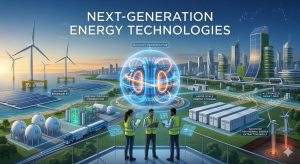
The future of technology depends on energy.
AI data centers, electric vehicles, factories and digital infrastructure all require electricity. At the same time, many countries are trying to expand low-carbon energy systems.
This is creating interest in technologies that can generate, store and distribute electricity more effectively.
One example highlighted by the World Economic Forum is everything-to-grid energy.
The idea is to allow electric vehicles, batteries, buildings and other distributed energy resources to both consume electricity and return stored electricity to the grid when needed.
An electric vehicle, for example, may spend most of the day parked. Its battery could potentially provide electricity to a building or grid during periods of high demand, depending on the vehicle, infrastructure and electricity market.
The IEA’s 2026 Energy Technology Perspectives also highlights the rapid development of energy technologies, including batteries, solar, electric vehicles, hydrogen and other technologies across the energy system.
Other areas to watch
- Advanced batteries
- Grid-scale storage
- Smart grids
- Low-emission hydrogen
- Nuclear technologies
- Geothermal energy
- Carbon capture
- Energy management software
The important trend is not one single energy technology. It is the development of an energy system capable of handling increasing electricity demand while remaining reliable and affordable.
-
Direct Lithium Extraction

Lithium is an important material for rechargeable batteries.
Demand for batteries makes the way lithium is produced increasingly important.
Traditional lithium extraction from certain brines can involve large evaporation ponds and long processing times.
Direct lithium extraction (DLE) uses technologies such as sorbents, membranes or solvents to selectively remove lithium from brine.
The World Economic Forum reports that some DLE operations are already being developed at industrial scale and that the approach can potentially reduce the time required to recover lithium from brine.
Why it matters
Battery production depends on reliable supplies of important raw materials.
If lithium can be extracted from a wider range of resources, including certain geothermal fluids or other brines, countries may gain more options for developing domestic supply chains.
That could affect:
- Electric vehicles
- Battery storage
- Consumer electronics
- Renewable energy systems
- Industrial batteries
DLE is still not a universal solution. Different brines have different chemical compositions, and the economics of extraction vary from one location to another.
The technology therefore needs to prove that it can operate economically at larger scales.
-
Post-Quantum Cryptography

Quantum computing creates an unusual cybersecurity problem.
Today’s encryption protects enormous amounts of digital information. If sufficiently capable quantum computers become available, some widely used cryptographic methods could become vulnerable.
That is why researchers are developing post-quantum cryptography.
One important approach is lattice-based cryptography.
Instead of relying on mathematical problems that could potentially be attacked by quantum algorithms, lattice-based systems use mathematical structures believed to be difficult for both conventional and quantum computers to solve.
The National Institute of Standards and Technology finalized its initial post-quantum cryptography standards in 2024, and organizations are now working through the practical migration process. The World Economic Forum lists lattice-based cryptography as one of its 10 emerging technologies for 2026.
Why it matters
Cybersecurity upgrades can take years.
Large organizations may have thousands of applications, devices and systems using cryptography. Replacing those systems cannot always happen immediately.
There is also a “harvest now, decrypt later” concern: encrypted information collected today could potentially be decrypted in the future if sufficiently capable quantum computers become available.
Where it matters
- Banking
- Government systems
- Cloud services
- Messaging
- Healthcare
- Defense
- Critical infrastructure
- Long-term sensitive data
Post-quantum security may therefore become an increasingly important part of cybersecurity planning even before large-scale quantum computers become practical.
How These Technologies Are Connected
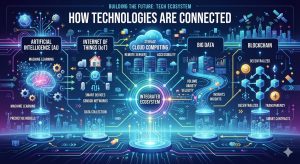
These technologies may appear unrelated at first.
A quantum computer belongs to computing. Precision fermentation belongs to biotechnology. Advanced batteries belong to energy. Robotics belongs to physical automation.
But they are increasingly connected.
The World Economic Forum’s 2026 technology convergence report describes eight broad technology domains coming together: AI, omni computing, engineering biology, robotics, advanced materials, spatial intelligence, quantum and next-generation energy.
That convergence is important.
A future robot may combine AI, specialized chips, sensors, advanced materials and a world model.
A future drug-discovery system may combine AI, quantum computing and biotechnology.
An electric vehicle may become part of an intelligent energy network rather than simply a transportation device.
This is why the next phase of technology may be less about one technology replacing another and more about several technologies working together.
Which Emerging Technologies Are Closest to Mainstream Use?
Not all emerging technologies are at the same stage.
Some are already entering commercial deployment, while others remain largely in research or early-stage trials.
Closer to practical adoption:
- AI agents
- Physical AI and robotics
- Specialized AI chips
- Post-quantum cryptography
- Smart energy systems
- Precision fermentation
Developing but still facing major technical or commercial barriers:
- World models
- Direct lithium extraction
- Personalized mRNA cancer vaccines
- Quantum simulation
- Advanced quantum computing
This distinction matters when thinking about the future.
A technology can receive enormous attention while remaining years away from widespread use. Conversely, a less famous technology can quietly become important because it solves a specific industrial problem.
What Comes After AI?
It is tempting to ask which technology will replace AI.
That is probably the wrong way to look at the next technology cycle.
AI is increasingly becoming a layer that supports other technologies.
Robots use AI to understand their surroundings. Drug researchers use AI to analyze biological information. Energy systems use software and AI to coordinate distributed resources. Chip designers use AI to improve hardware development.
At the same time, technologies such as quantum computing, biotechnology, robotics and advanced materials solve problems that AI alone cannot solve.
So the next major technology shift may not be after AI.
It may be AI combined with everything else.
How to Follow Emerging Technology Trends in 2026
Technology news moves quickly, and not every announcement represents meaningful progress.
A better approach is to follow several signals.
Watch real-world deployments
A prototype is interesting. A technology being used repeatedly in real environments is more informative.
Look for commercial installations, production systems, clinical trials, industrial partnerships and measurable results.
Follow research, not just social media
Social media tends to reward dramatic announcements.
Research papers, technical documentation, regulatory decisions and company filings can provide a better picture of what has actually been demonstrated.
Watch costs
Technology adoption often depends less on whether something is technically possible and more on whether it is affordable.
A battery chemistry, robot or quantum system may work in a laboratory but still have a long road to commercial deployment.
Watch infrastructure
Some technologies depend on supporting systems.
Electric vehicles need charging infrastructure. AI needs computing and electricity. Quantum systems need specialized hardware. Personalized medicine needs sequencing and manufacturing capabilities.
When the supporting infrastructure improves, adoption can accelerate.
Final Thoughts
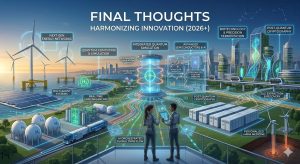
The most interesting emerging technologies of 2026 are spread across far more areas than artificial intelligence.
AI agents are making software more autonomous. Physical AI is bringing intelligence into machines and robots. Quantum computing is opening new approaches to simulation. Biotechnology is changing how some products and medicines can be produced. Energy technologies are adapting to rising electricity demand, while post-quantum cryptography is preparing digital systems for a different computing era.
Some of these technologies will scale quickly. Others may take many years or fail to become commercially viable.
That uncertainty is part of what makes emerging technology worth watching.
Instead of asking which technology will become the next “big thing,” it is more useful to ask a practical question: which technologies are moving from research toward real-world use, and what problems can they actually solve?
In 2026, that shift is already visible across computing, healthcare, energy, robotics, materials and cybersecurity.